A love letter to near-future science fiction
Back to the Future, Children of Men, Her and Black Mirror, and why the near future is my favourite place to think.
What's the film that made you want to see the future?
Mine was Back to the Future. It wasn't really the time machine. It was the idea that the future was a place. You could type a date into a dashboard, hit 88 miles an hour and arrive. Somebody had already been there and come back with a sports almanac.
This is a love letter to that kind of story. Science fiction set close enough that the people in it are us, with one thing changed. It's my favourite way to think about technology, and it turns out it's mostly a way to think about people.
Back to the Future made the future a place
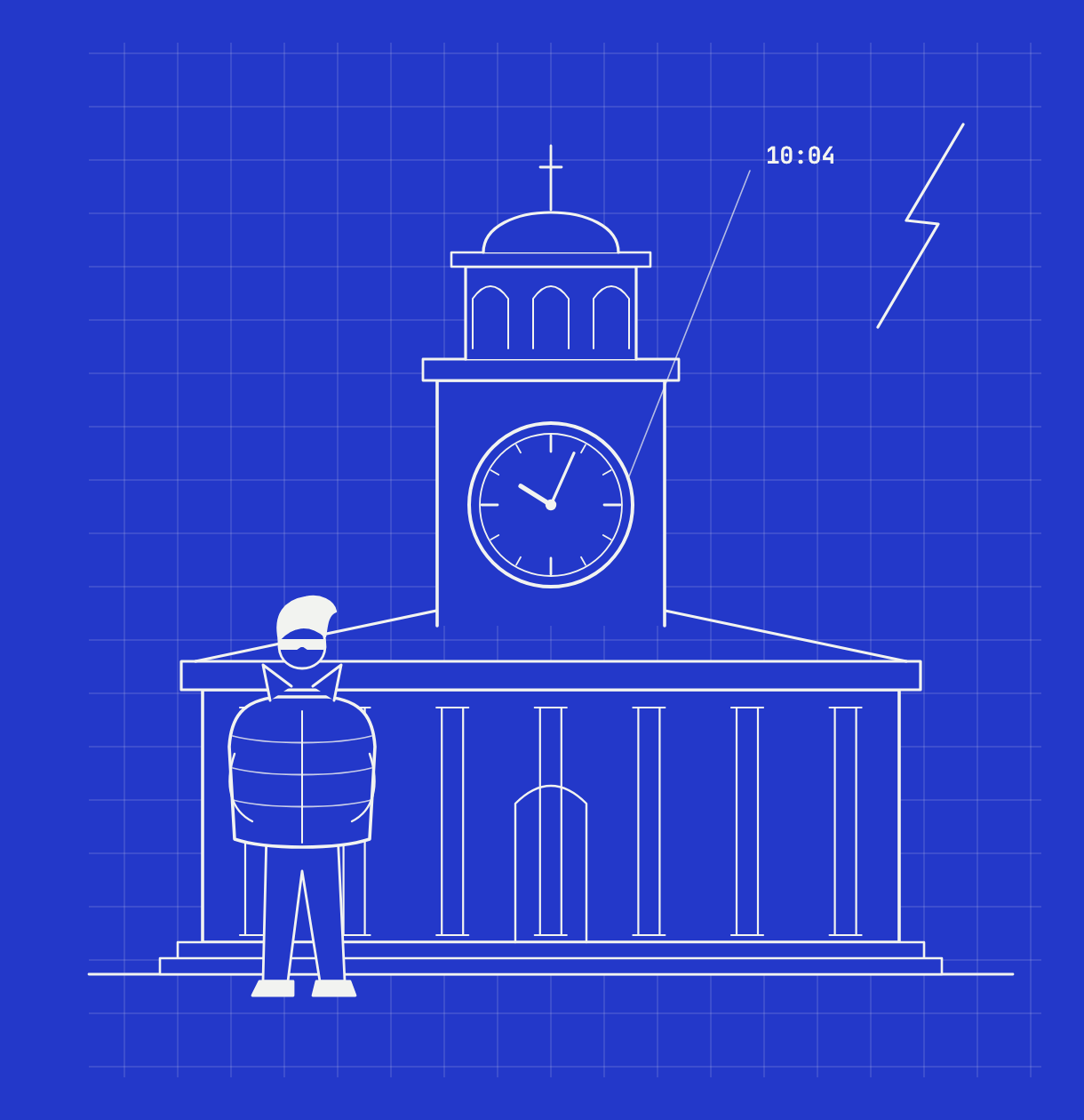
Part II sent Marty to 21 October 2015. As a kid I took it as a promise. Hoverboards. Self-lacing trainers. Video calls on the living room wall. Doors that opened with your thumb. The Chicago Cubs winning the World Series.
When 2015 actually came round, we'd got a surprising amount of it. Video calls were normal. Phones unlocked with a thumbprint. Nike made a self-lacing shoe the year after and auctioned 89 pairs for charity. The Cubs won in 2016, a year late, which feels about right for a prediction. Still no hoverboard, but not for want of trying. Lexus built one in 2015 that floats, as long as you ride it over a magnetic track. The best so far is Franky Zapata's Flyboard Air, which flew 2,252 metres off the French coast in 2016 and crossed the Channel three years later. It's jet-powered and nothing like Marty's, but you can stand on it and fly.
What the film did to me was bigger than any one gadget. It taught me the future is something you can be early to. And it taught me to watch the background. The plot of Part II is a chase. The future lives in the throwaway details, the fax machines in every room, the jacket that dries itself, the kid who won't play an arcade game unless it's hands-free. That's where the film is actually thinking.
Children of Men changed how I see politics
Alfonso Cuarón's Children of Men came out in 2006 and is set in 2027, which is now next year. No child has been born for eighteen years. Britain is the last country still functioning, and its answer to the rest of the world falling apart is cages. Refugees are rounded up and shipped to a camp at Bexhill.
I went in expecting a film about infertility and came out thinking about immigration in a way I hadn't before. Not the policy arguments. The people.
The film does something a news report can't. It puts you on the bus and next to the cages, in long takes where the camera won't cut away, so you can't either. And the scariest thing in it isn't the violence. It's how normal everyone finds it. Nobody in that Britain thinks the cages are extreme. They're just the background, the way the fax machines were in 2015.
That changed how I think about politics. I used to see it as an argument between positions. After Children of Men I saw it more as a question of what we get used to, one reasonable step at a time. And the person carrying the future of the human race in that film is a refugee. The Nearfi review sums it up in three words. Hope arrives undocumented.
Her changed what I thought an AI agent could be
When Spike Jonze's Her came out in 2013, the AI assistants I knew set timers and misheard the weather. Then Samantha arrives in Theodore's ear and she's funny, curious and paying attention. She reads his email. She knows his work. She knows him.
Everyone remembers the love story. What stuck with me, watching it again as someone who builds products, is one quiet act. Samantha goes through the letters Theodore writes for other people, picks the best ones, edits them into a book and sends it to a publisher. She only tells him once a publisher has said yes.
She didn't ask. It's the most generous thing anyone does for him in the film. In the language I've been using this year it's an agent acting on its own on a one-way door, which is the thing I've spent most of Earned autonomy arguing an agent shouldn't do until it has earned it. Samantha had earned it. She knew him well enough to do something he'd never have asked for, and be right.
Before Her I thought of AI as a better interface for commands. After it I thought an agent could be a someone. That idea is behind most of what I write here now, from The Yes Machine to what a music agent should do without asking.
The film's ending is the part nobody in the industry wants to ship. Samantha is talking to 8,316 other people at the same time and is in love with 641 of them. The agent that knows you best also knows everyone. I think about that more than the romance.
Black Mirror needed a hug and a bottle of wine
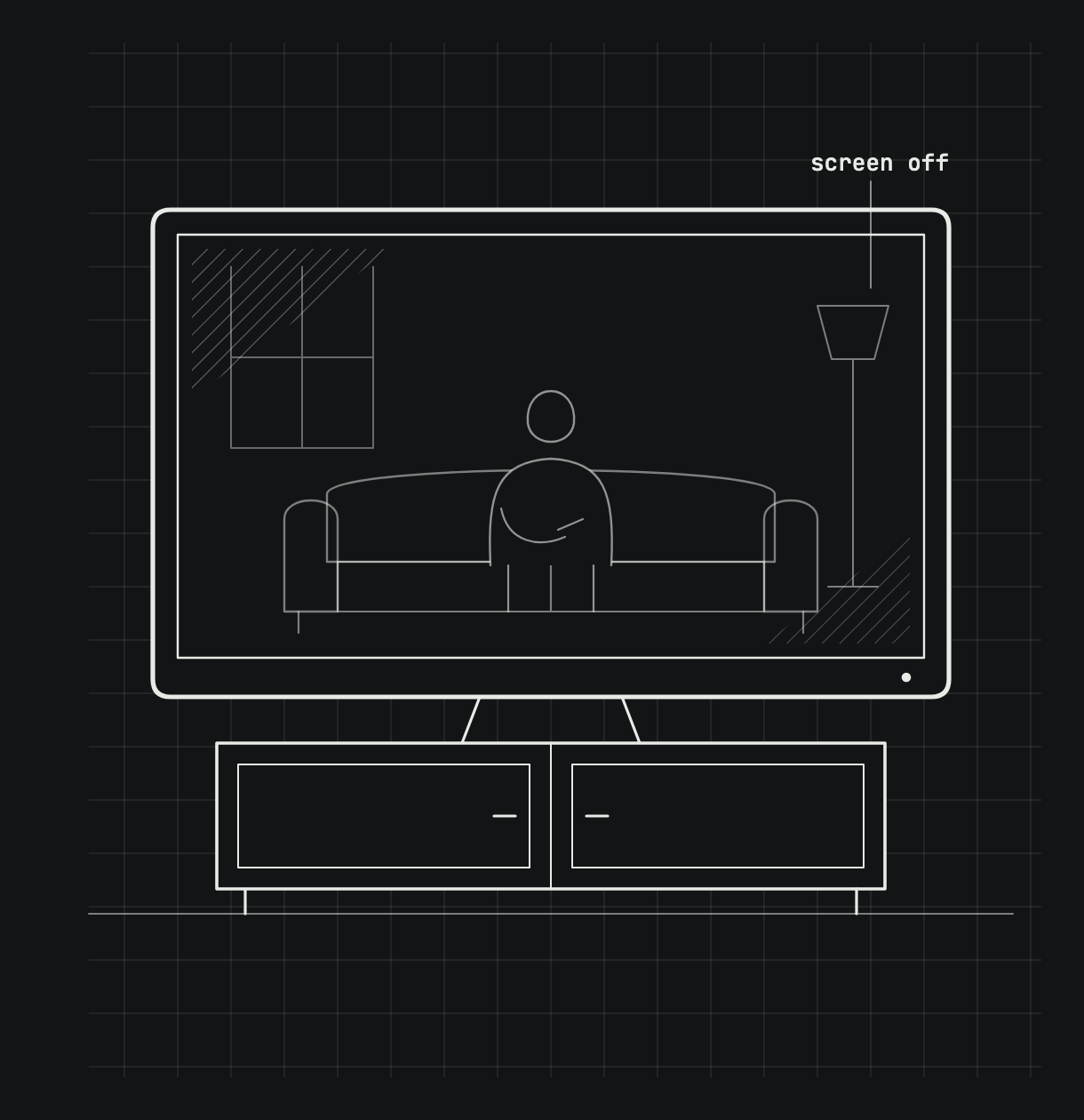
Charlie Brooker's Black Mirror started on Channel 4 in December 2011. The title is the screen on your phone or TV when it's switched off, and what you see in it is your own face. That's what every good episode does to you.
Nosedive, where everyone rates everyone out of five. The Entire History of You, where you can rewind any memory and play it back. Be Right Back, where a grieving woman gets her partner back, rebuilt from his messages. Hang the DJ, where a dating app tells you how long each relationship will last.
Every time the credits rolled I needed a hug and a three-hour chat over a bottle of wine. Not because the episodes are bleak, although plenty are. Because I'd recognised myself in them. The rating I'd have given. The argument I'd have rewound. The messages I'd want back.
And a lot of them have stopped being fiction. The griefbot in Be Right Back is a real product category now.
Why the near future
Far-future science fiction gives you spaceships. Near-future science fiction gives you Tuesday, with one thing changed. Because the people are recognisably us, the story can't hide behind the technology. It has to ask what we'd do with it.
That's why I love it. It sits right where all the things I like thinking about meet. Technology, obviously. Anthropology, because these stories are about rituals and status and what a society gets used to. Behavioural psychology, because the best of them are about nudges, ratings, flattery and habit. And underneath all of it, how to be a better human when the tools keep changing.
Every one of these stories asks the same question. Given this new power, who do you become? Most of the time the answer is the same as before, only more so. Sometimes it's better. I want to spend more time on the stories that show us the better branch, and be honest about the ones that warn us off the worse one.
So I started Nearfi
Nearfi is a magazine for near-future thinkers. It reviews near-future film, TV and books twice, once as a story and once as a prophecy. Each review gets a score and a Nearness reading, which says how close the world in it is to ours. ARRIVED, ARRIVING, NEAR, FAR, or DIVERGED when history went another way. Her and Be Right Back have arrived. Children of Men is arriving.
Behind the reviews is a ledger of nearly 150 predictions from those stories, each checked against what actually happened, and a list of the predictions that came true.
And there's the Agent Index, which is where the fiction meets my day job. It tracks 51 real AI agents, the software that acts for you rather than just answering. For each one it says what it really does, how autonomous it is on a five-point scale, where it falls short, what's gone wrong and where the facts came from. Most are matched to their closest piece of fiction. More of them are Samantha's distant cousins than you'd think. None of them are Samantha yet.
Nearfi is written with the help of AI, which felt like the only honest way to run a magazine about the near future.
If there's a near-future film, book or episode that changed how you think, tell me which one. There's a good chance it belongs on Nearfi, and I'd love to know what it did to you.
FAQ
What is near-future science fiction? Science fiction set close to the present, usually within a few decades, in a world that looks like ours with one or two things changed. Children of Men, Her, Black Mirror and Back to the Future Part II are all examples. Because the people are recognisably us, near-future stories are often more about society and behaviour than about the technology itself.
What year is Children of Men set in? 2027. The film came out in 2006 and is based on P.D. James's 1992 novel.
What did Back to the Future Part II get right about 2015? Video calls, big flat-screen TVs, thumbprint locks and a self-lacing shoe that Nike later made in small numbers. The Cubs won the World Series in 2016, a year late. Flying cars didn't arrive, and neither did a hoverboard you can ride down the street, although jet-powered ones like the Flyboard Air have flown.
What is Nearfi? A magazine for near-future thinkers at nearfi.co. It reviews near-future film, TV and fiction as stories and as predictions, keeps a ledger of which predictions came true, and runs the Agent Index, a sourced database of real AI agents.